LEON MISOULIS
I strive to design systems and mechanics that guide players naturally. I also approach gameplay as its own form of art, trying to bridge the gap between tactile gameplay and beautiful aesthetics.
My work spans solo projects, university teams, and a 20+ member voluntary studio
PROJECTS
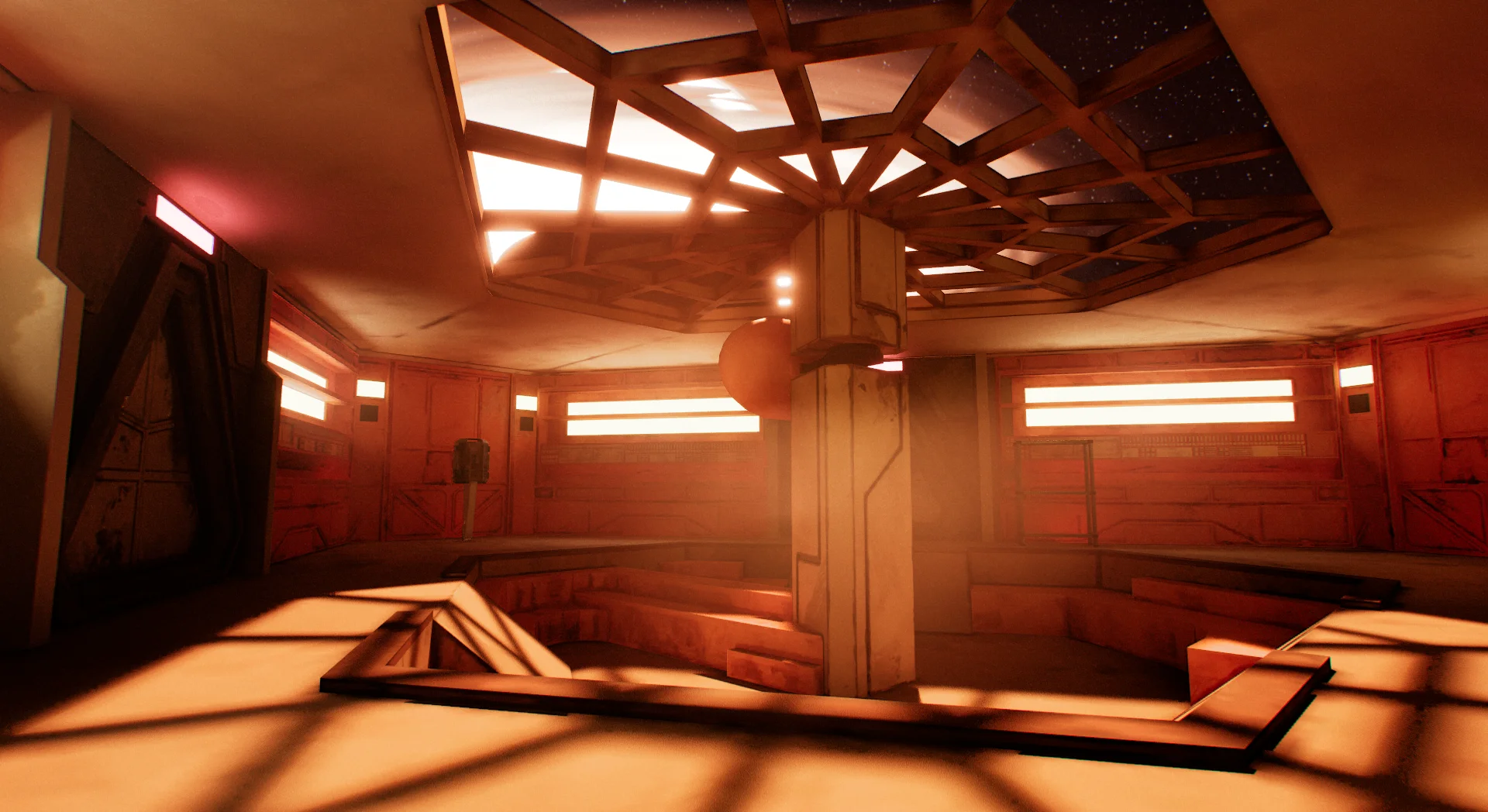
To Pierce Eternity
Systems & Gameplay Mechanics DesignerFirst-Person Psychological Horror | SciFi
Designed core gameplay systems, chase sequence mechanics, game flow, and more. Originally developed as a game demo for Hyperluminal Games during my time at Abertay University. Set within a derelict space station, the player must investigate and solve puzzles to restore critical systems, all while contending with a rogue HUD that harbors its own sinister agenda.
KEY IMPROVEMENTS: Team Collaboration, Cross Discipline Communication, Design Framework Fundamentals & Documentation

Heldritch Rush
Level DesignerSpline Shooter
Designed and built Level 2 from scratch, including 2D layout planning, greyboxing, and spline integration. Heldritch Rush is a fast-paced, post-apocalyptic spline shooter featuring modular power-up systems and dynamic enemy spawners.
KEY IMPROVEMENTS: Level Architecture Pipeline, Spline Logic Constraints, Cross-Discipline Collaboration
Snowkid Warfare
Systems & Gameplay Mechanics DesignerThird-Person Combat | Twin-Stick Shooter
Designed custom follower AI interpolation and squad-based combat systems. Snowkid Warfare is a stylized, fast-paced twin-stick shooter built to capture the chaotic energy of a childhood snowball fight while keeping gameplay tight and satisfying.
KEY IMPROVEMENTS: Combat Design, Scoping & Risk assessment, Production Realities and Adaptation

Hull & Horizon
Systems Designer & Gameplay Flow DesignInteractive Museum Experience
Designed the full game flow, the ship customisation system, water tank testing cinematics, and a modular dialogue system. Hull & Horizon is a two-phase interactive museum experience built for V&A Dundee, allowing visitors to build and test their own RMS Queen Mary.
KEY IMPROVEMENTS: Systems & Game Flow Design, Sequencer & Cinematic Design, Client-Facing Production

Slash & Jump
Combat Design FocusCombat & Movement Prototype
Engineered movement mechanics and combat systems from the ground up, including combo buffering and state blending. Slash & Jump is a high-mobility combat and movement prototype exploring tactile swordplay and aerial traversal.
KEY IMPROVEMENTS: Fluid & Weighty Combat, Movement & Combat Blending, UE5 Skill Development
League of
Legends
Apex Ranked System
League of Legends — Apex Ranked System Analysis
Systems AnalysisRanked System Design · Game Systems Analysis
A structured systems analysis of LP inflation at apex ranks — root causes, Riot's current approach, and proposed directions. Covers eleven contributing variables, four core system properties, and three proposals for structural improvement.
COVERS: Soft Cap Mechanics, MMR/LP Decoupling, Seasonal Reset Design, Structural Proposals
Strongest Roles
Systems Design
Building rulesets where every mechanic earns its place. I've designed modular power-up systems, dynamic spawners, and made scope calls under real time pressure
Mechanics
I aim to design mechanics that teach the player how to utilize the tools given to them while immersing themselves in the experience, without friction that doesn't get rewarded
Combat
Crafting the tactile feel of combat and movement. Snappy and responsive attacks that utilize weight and risk / reward to make each decision have its own impact
Technical Skills
ME
I'm a Junior Game Designer and Masters student at Abertay University, focusing on systems and level design. I've been playing music since I was 5 starting with cello, then picking up guitar and drums. This background in rhythm and composition has quietly shaped how I think about pacing and player flow, while also increasing my interest in game feel and artistic expression. I build things to understand them, whether that's a prototype, a music piece, a new recipe, or a sketch.
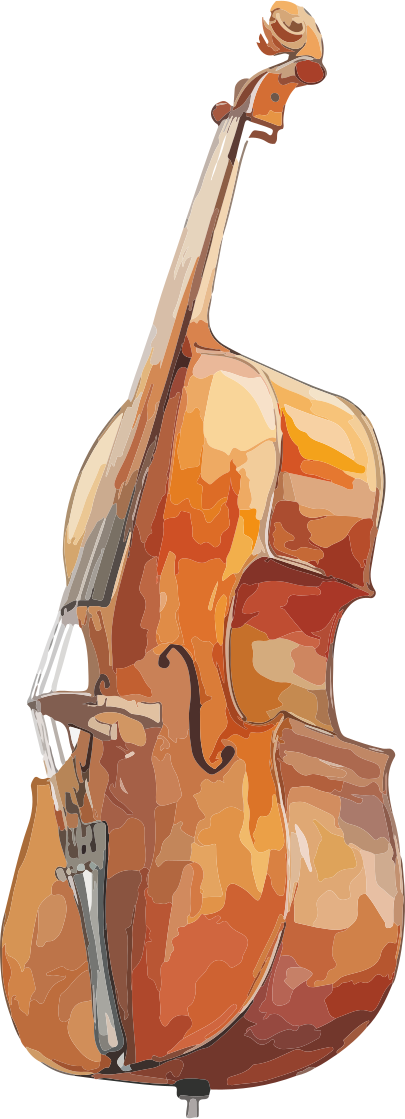
Music
My participation in orchestras and bands exposed me to the element of co-working and collaboration very early on.Music has also influenced the way I think about gameplay pacing and flow: tension, release, and the emotional arc you're taking a player through.

Drawing
Recently started studying enviromental composition and drawing fundamentals. Not to become an artist, but so I can visualize my ideas in a much more communicative way, and because I genuinely enjoy the process of creating and drawing.

Cooking
One of my favourite ways to think about systems and creativity. Every recipe is like a balance problem, from ingredients to timing and technique, all interacting in ways you can manipulate from the very beginning to create something truly unique.

Photography
Nature is my biggest reference library and inspiration for environmental design. The same things that make a photograph work such as framing, light & depth are the things that make a level feel alive. In my mind, nature is the best teacher.
Currently Playing
CONTACT
Reach out directly: leon.mis.2000@gmail.com