Context
Heldritch Rush is a spline shooter set in a post-apocalyptic world. I joined Sloth Doctor Games as a volunteer in mid-late January 2026 and have been working on it alongside my university studies.
My main responsibility has been designing and building Level 2 (a collapsed shopping mall) from scratch. That's meant going from reference gathering and moodboarding, through 2D layout planning, greyboxing, spline integration, and finally working with the art team on asset placement. It's been an 18+ person production and most of the work has involved close collaboration across programming, art, and game design.
Level 2 Development Showcase
Key Accomplishments & Skills
Level 2 Architecture
Owned the full design pipeline for Level 2, from the first moodboard to art placements. Every major spatial decision was documented and reviewed with the team before going into the engine.
Spline Shooter Design
Designing for spline-based movement was new to me. I learned the constraints of the system early and used them to shape the encounter spacing and pacing, instead of working against them.
Cross-Discipline Collaboration
Worked with programmers on enemy spawning and spline paths, with artists on asset placement and visual consistency, and with game designers on encounter difficulty and pacing.
Level Designer Showcase
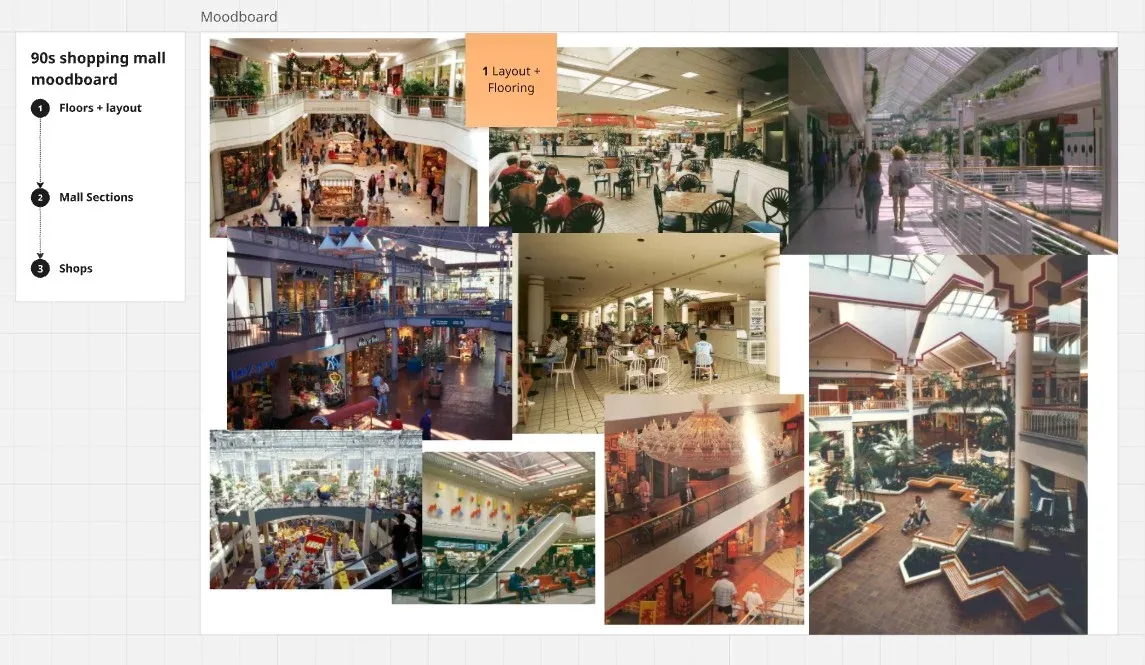
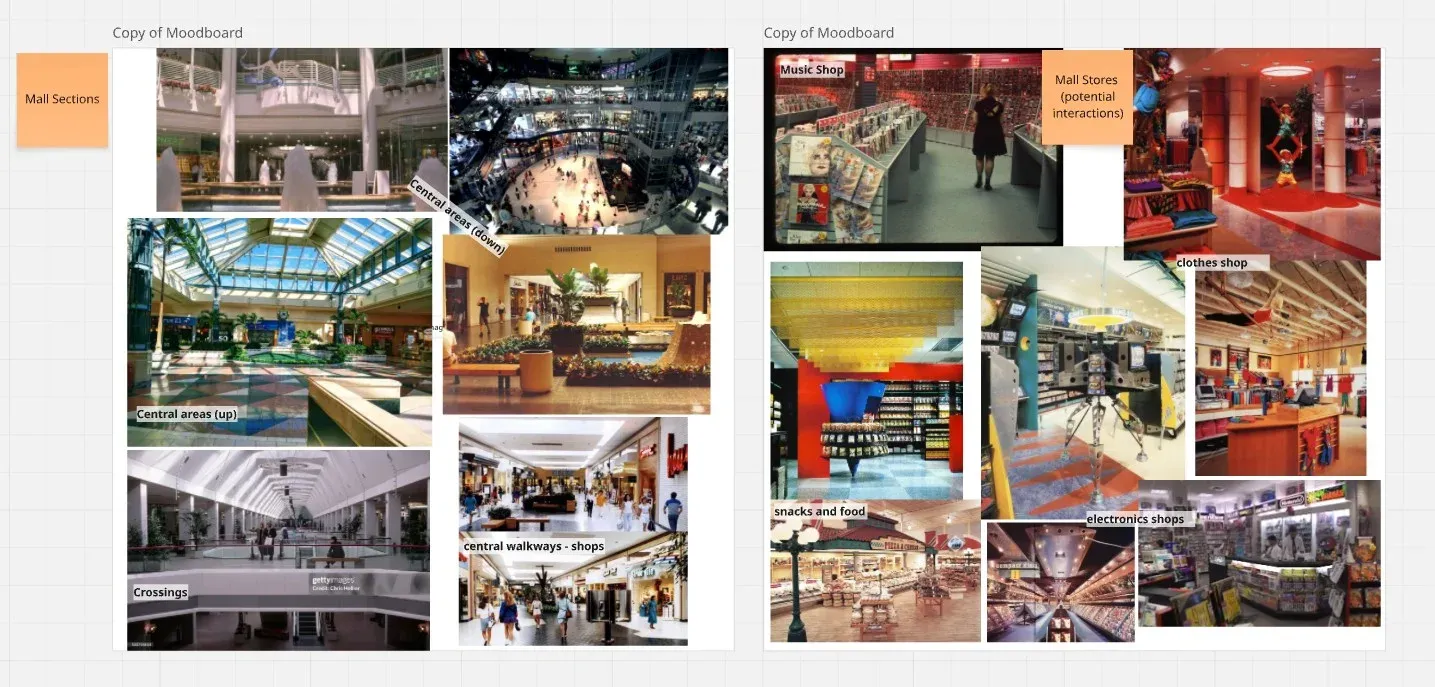
1. Reference-Driven Worldbuilding
Outcome: The team had a shared visual reference before anyone opened the engine, which meant fewer surprises when the greybox started taking shape.
Intention: I needed to bridge the gap between the project's abstract references and something that could actually be built and navigated.
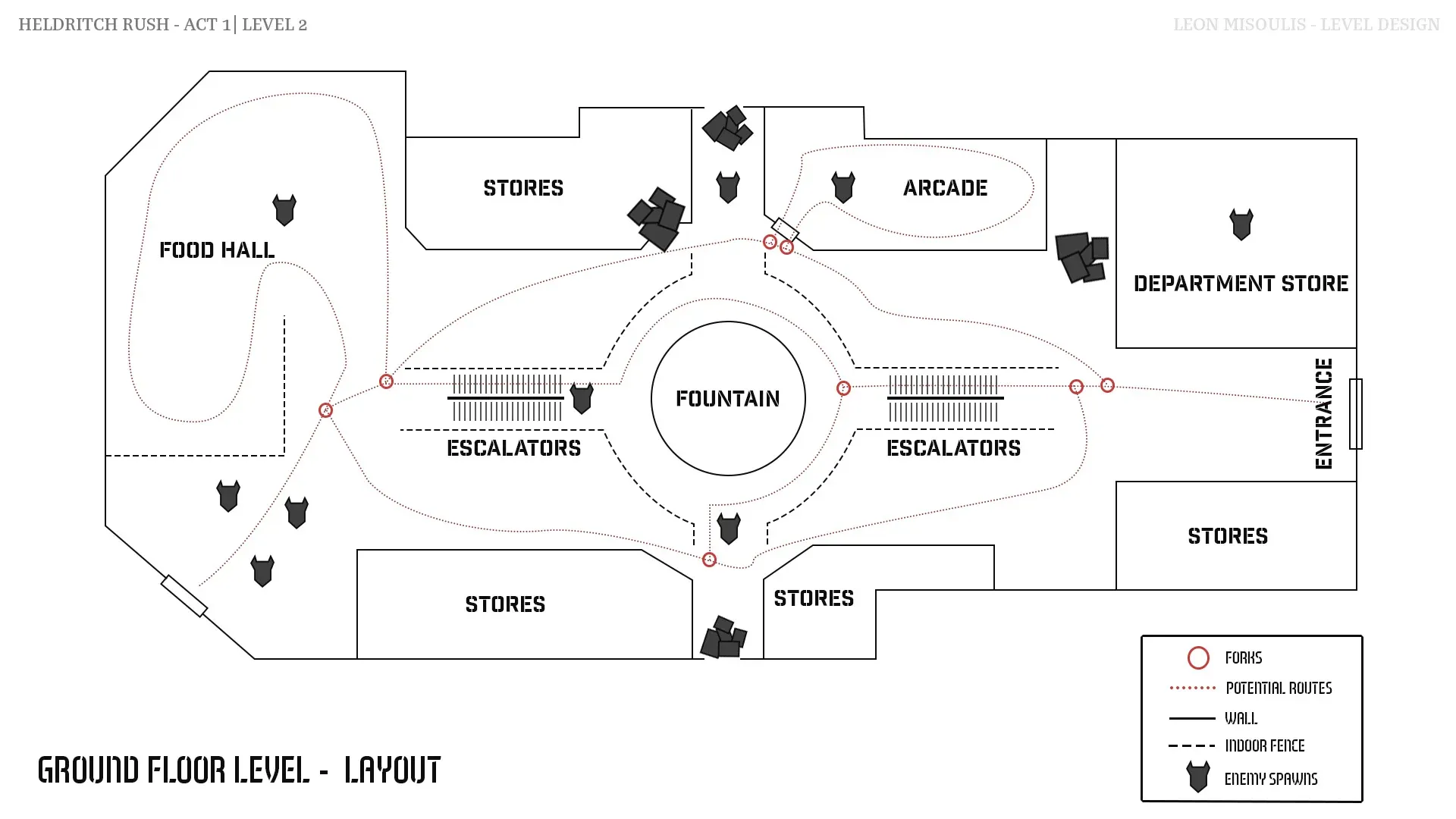
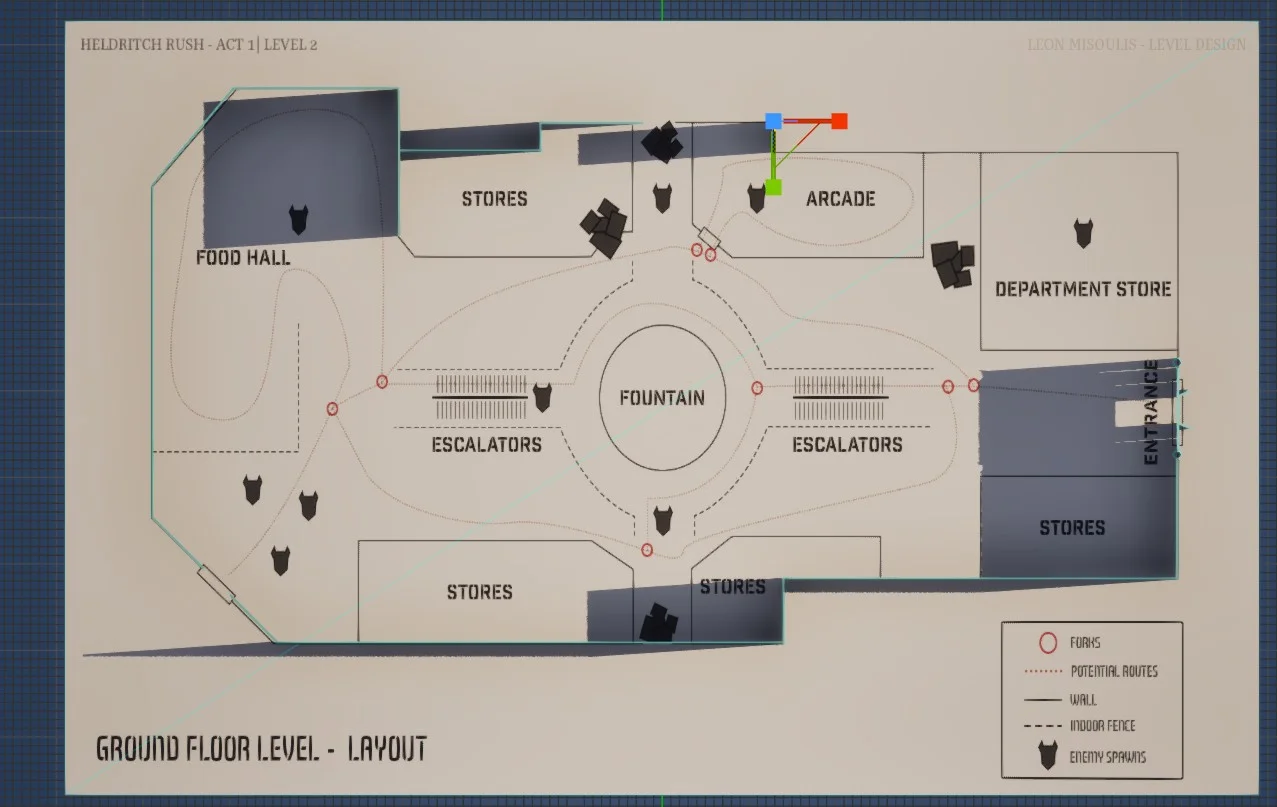
Process: I built a structured moodboard split into three layers: Floors & Layout, Mall Sections, and Shops. Once that was agreed on, I drafted a top-down 2D layout in Photoshop mapping the ground floor: central fountain, escalators, food hall, arcade, department store, and enemy spawn zones. The layout went to the team for review before any greybox work started.


1b. 2D Design Layout
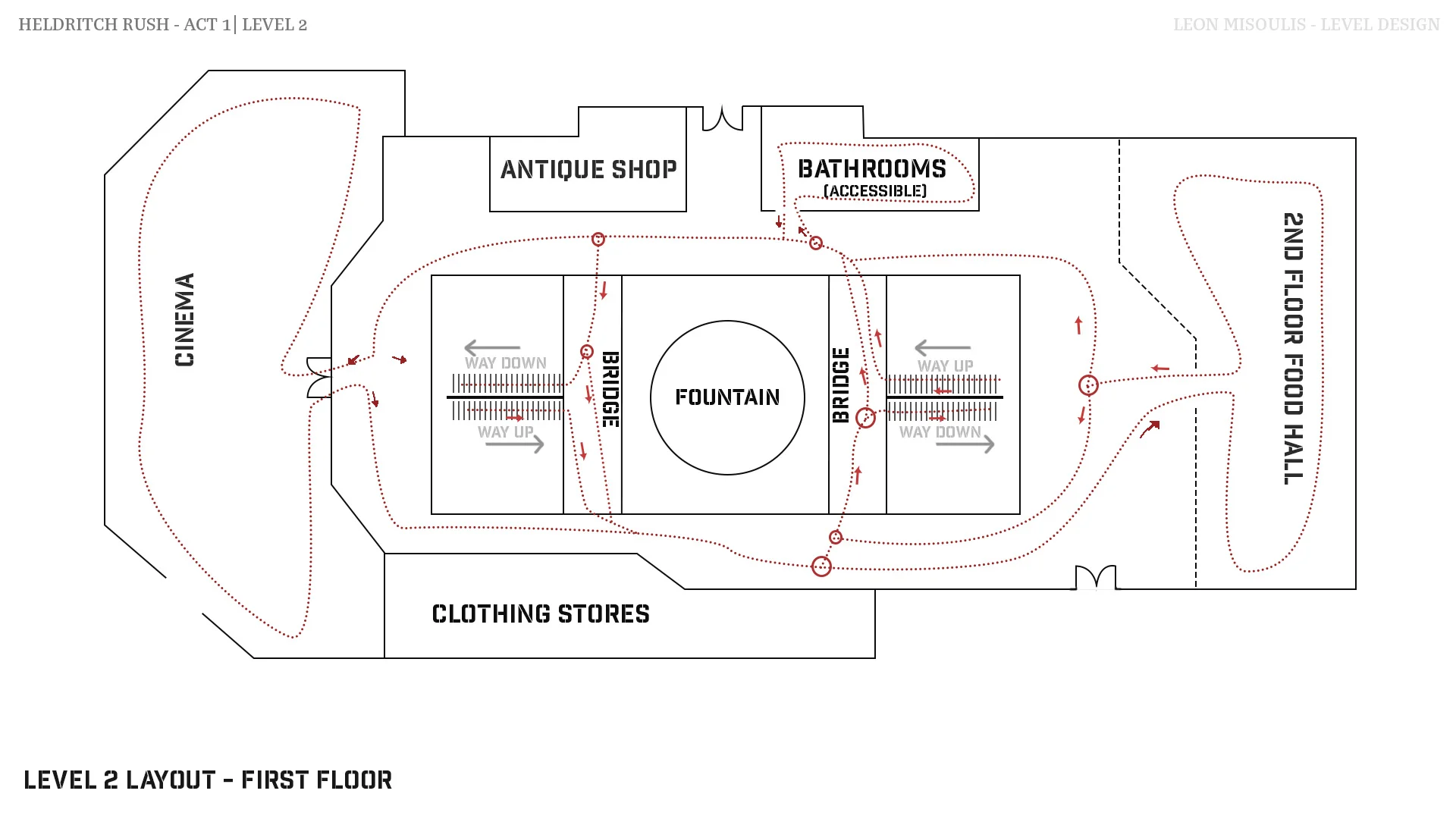
Outcome: Spatial flow and encounter spacing were validated before a single engine asset was placed.
Intention: I wanted to make sure the verticality and combat zones were actually feasible before committing to 3D.
Process: Drafted top-down 2D layouts in Photoshop for both the ground floor and the upper level, and shared them with the team for feedback.
2. Greybox to Spline Logic
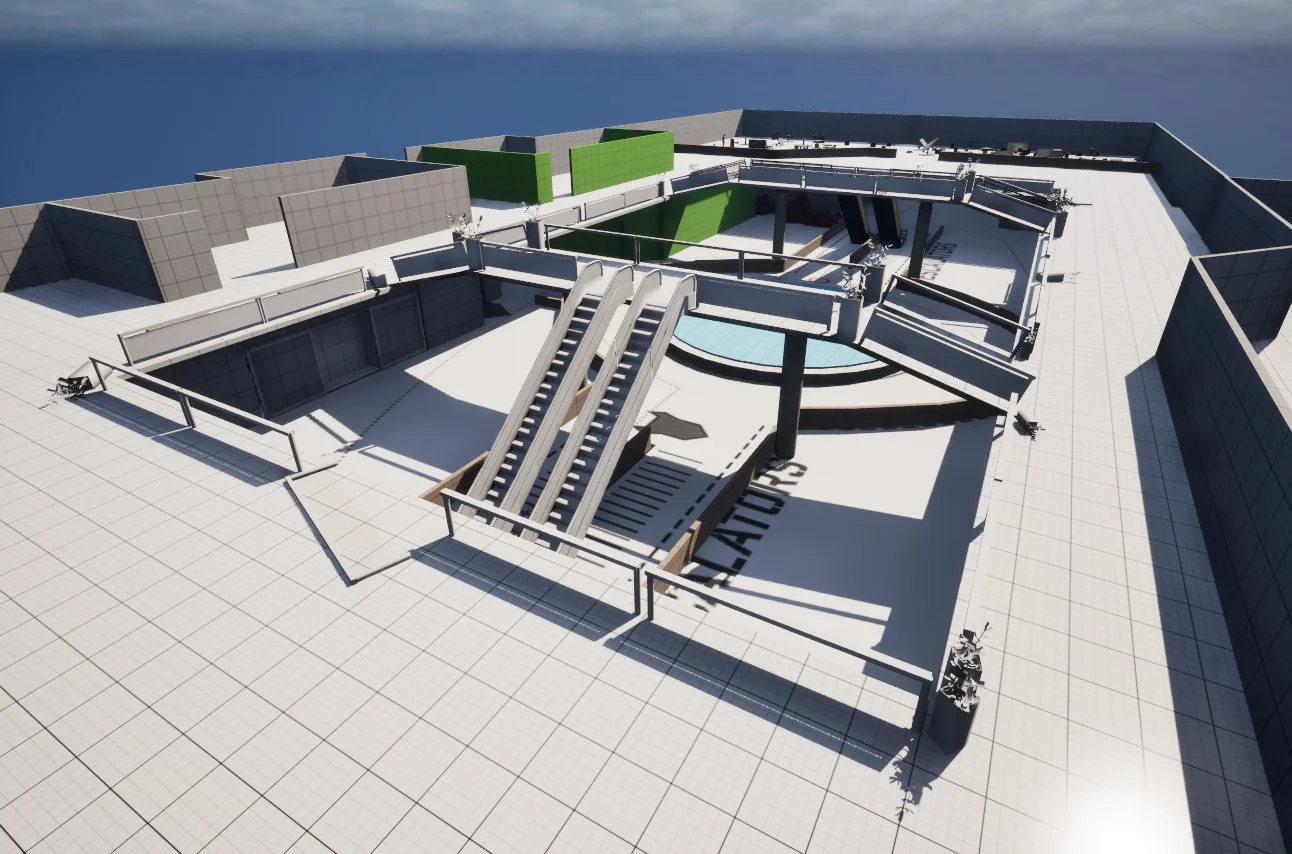
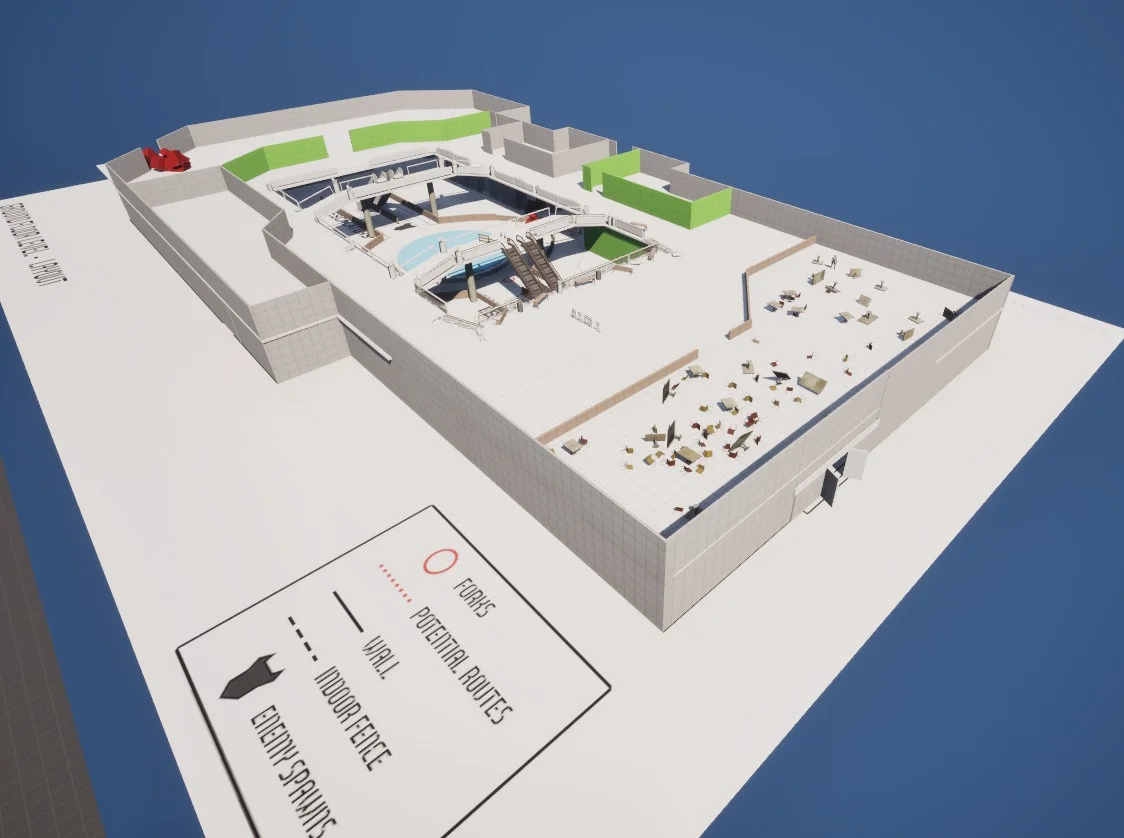
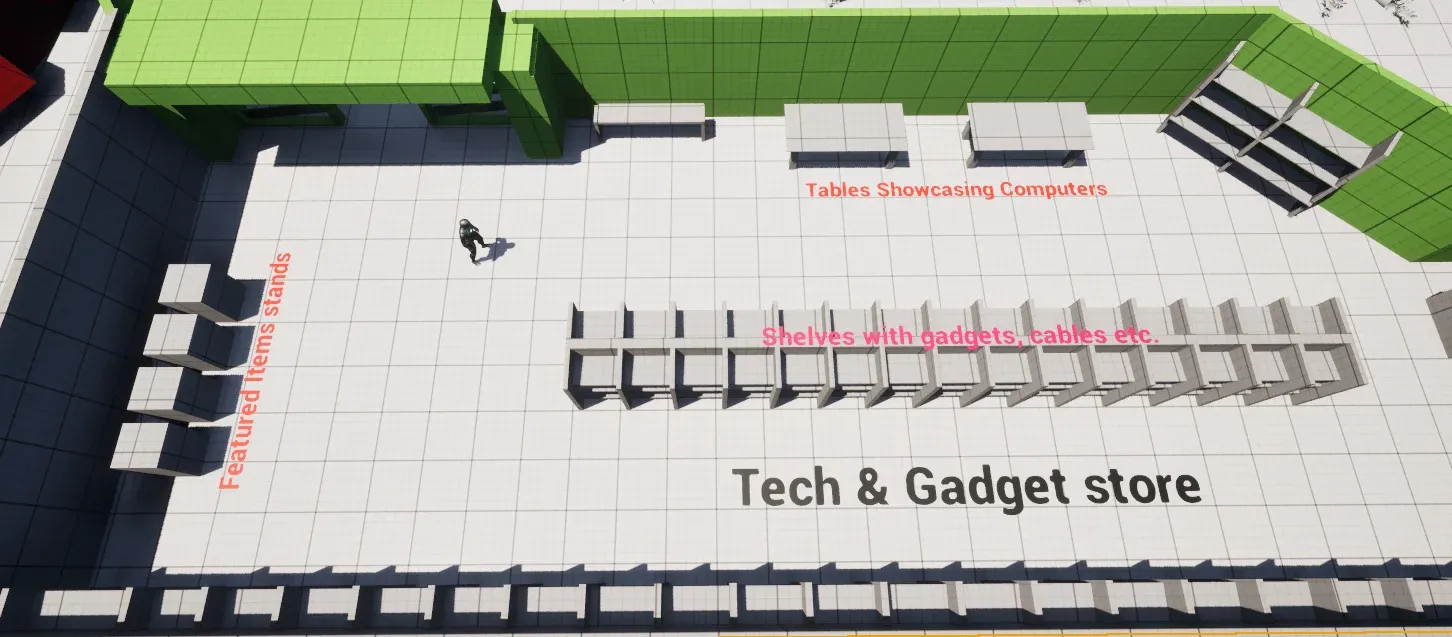
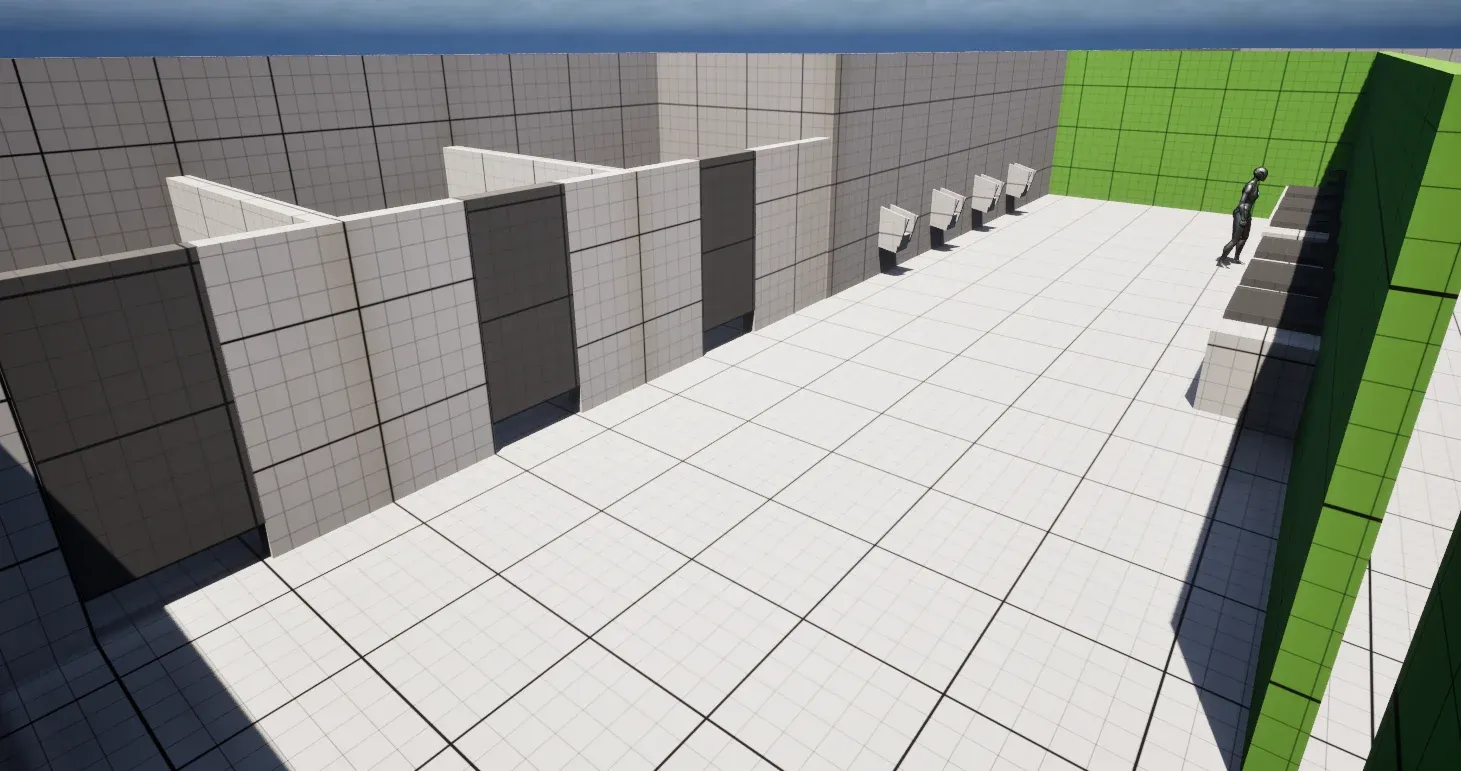
Outcome: The spline shooter mechanic worked within the level's spatial layout. Movement felt fluid through the mall geometry.
Intention: Spline-based movement is sensitive to geometry. I needed to know the volumes worked before adding any of the movement logic on top.
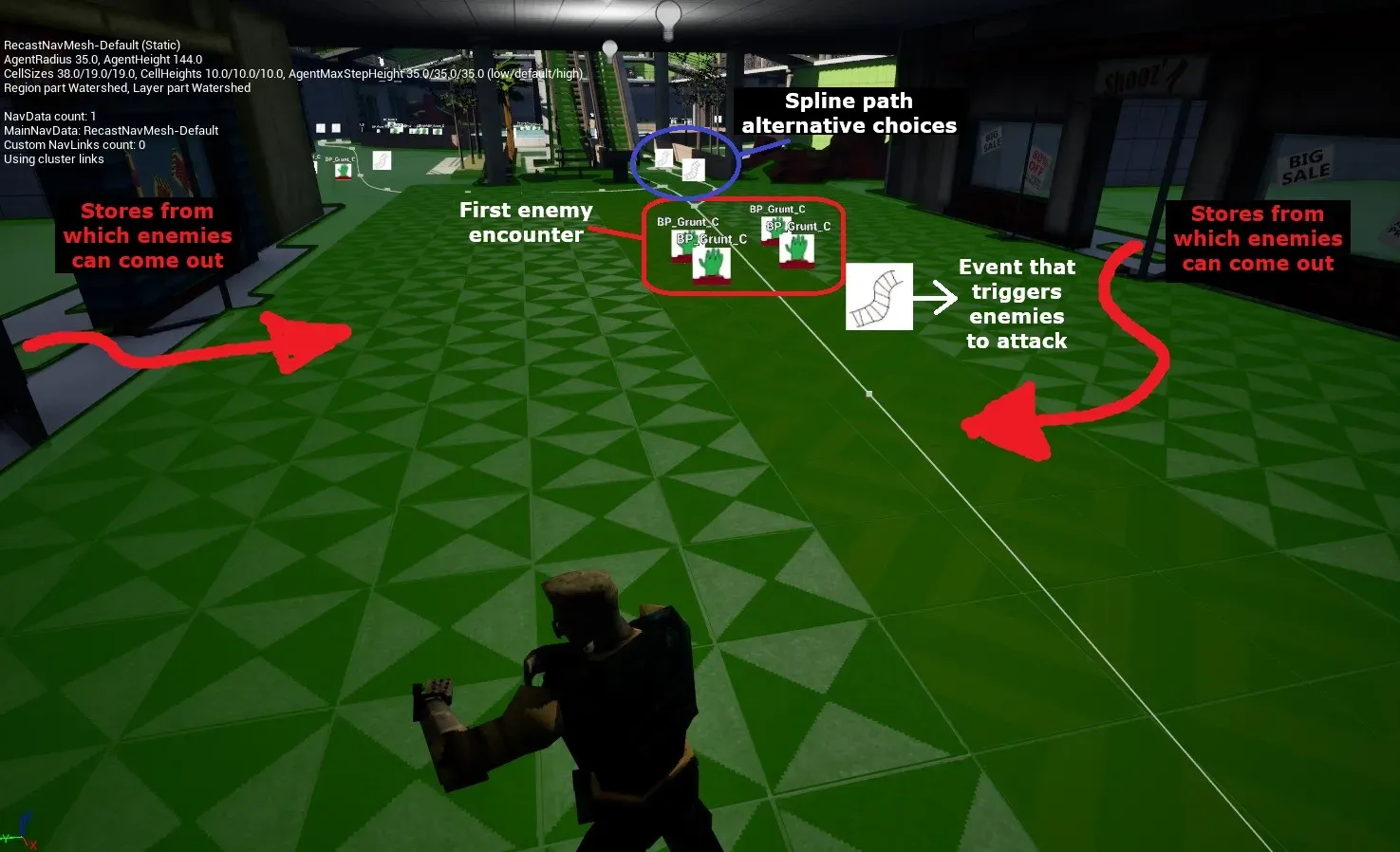
Process: I built the physical greybox first,testing room volumes, verticality, and sightlines before touching any splines. Once the layout held up, I worked with the programming team to implement movement splines and proximity-based enemy spawners. The sequencing lesson I learned the hard way is in the reflection cards below.
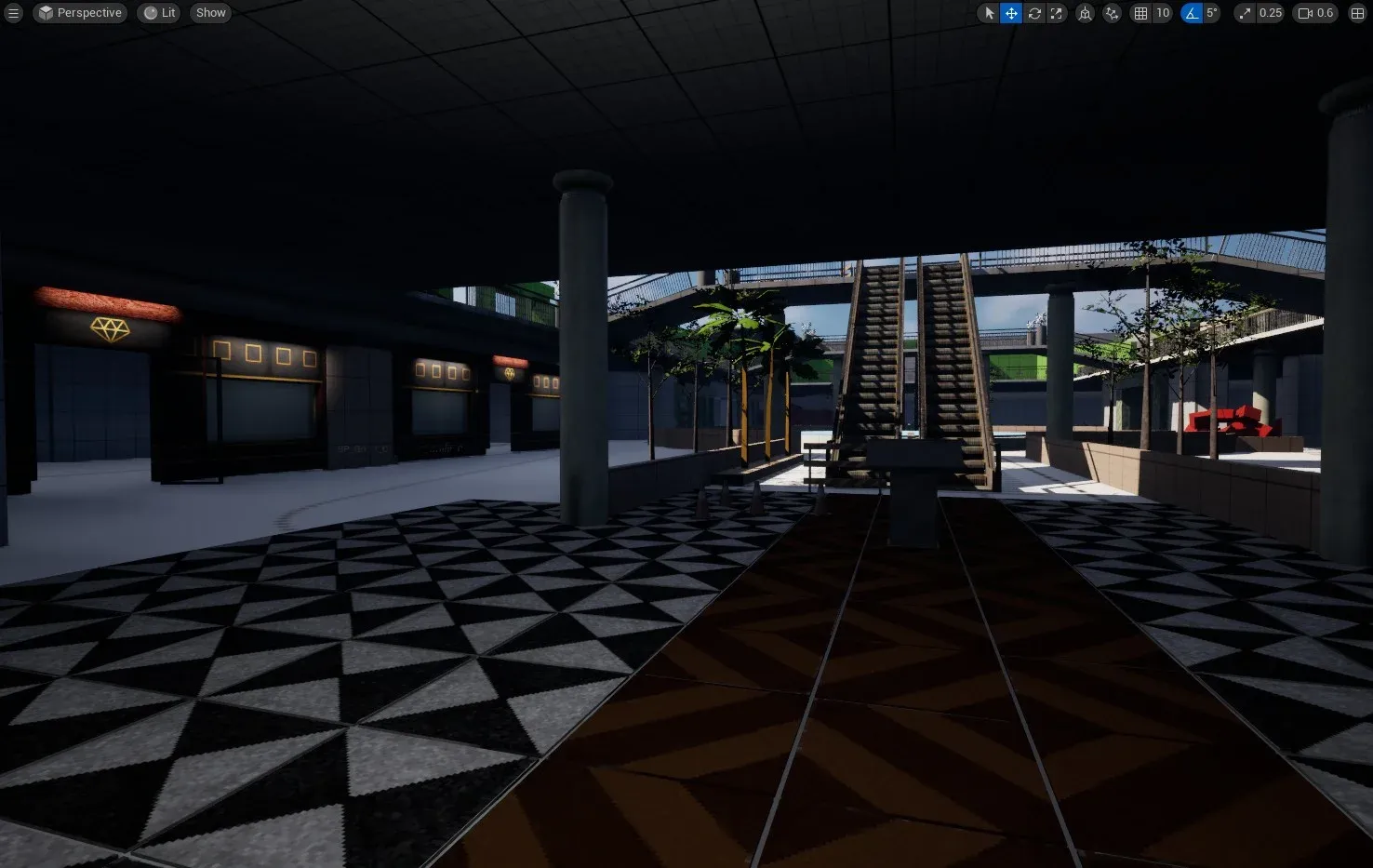
3. Extended blockout and asset pass
Outcome: Level 2 went from a functional greybox to a more detailed blockout to help artists with their asset production, while implementing assets they had already made.
Intention: Asset replacement is a risk. It's easy to accidentally shift things or break collision when swapping geometry for final art.
Process: Worked through a systematic replacement pass with the team, integrating their produced models and textures while keeping the structural layout intact.
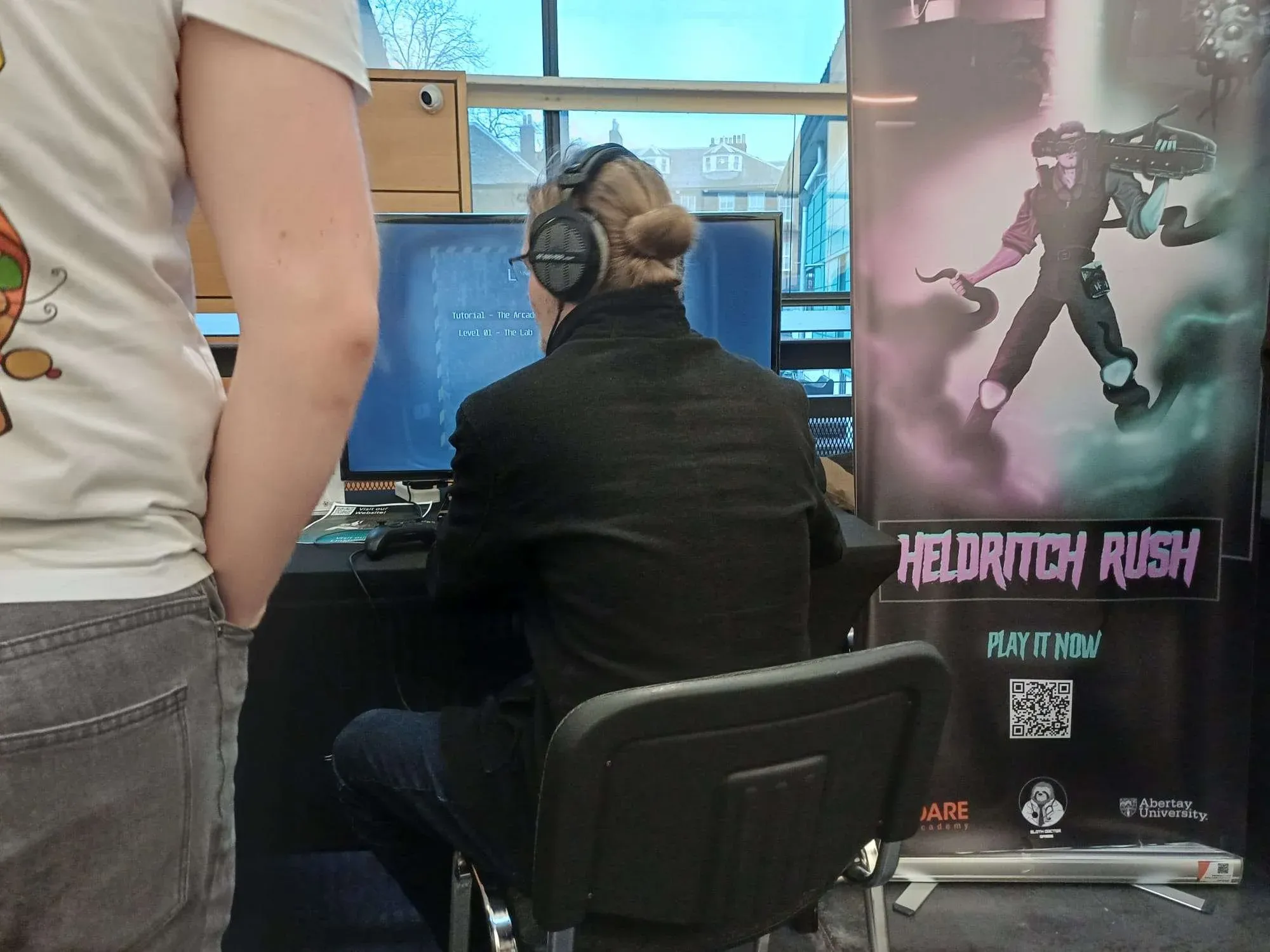
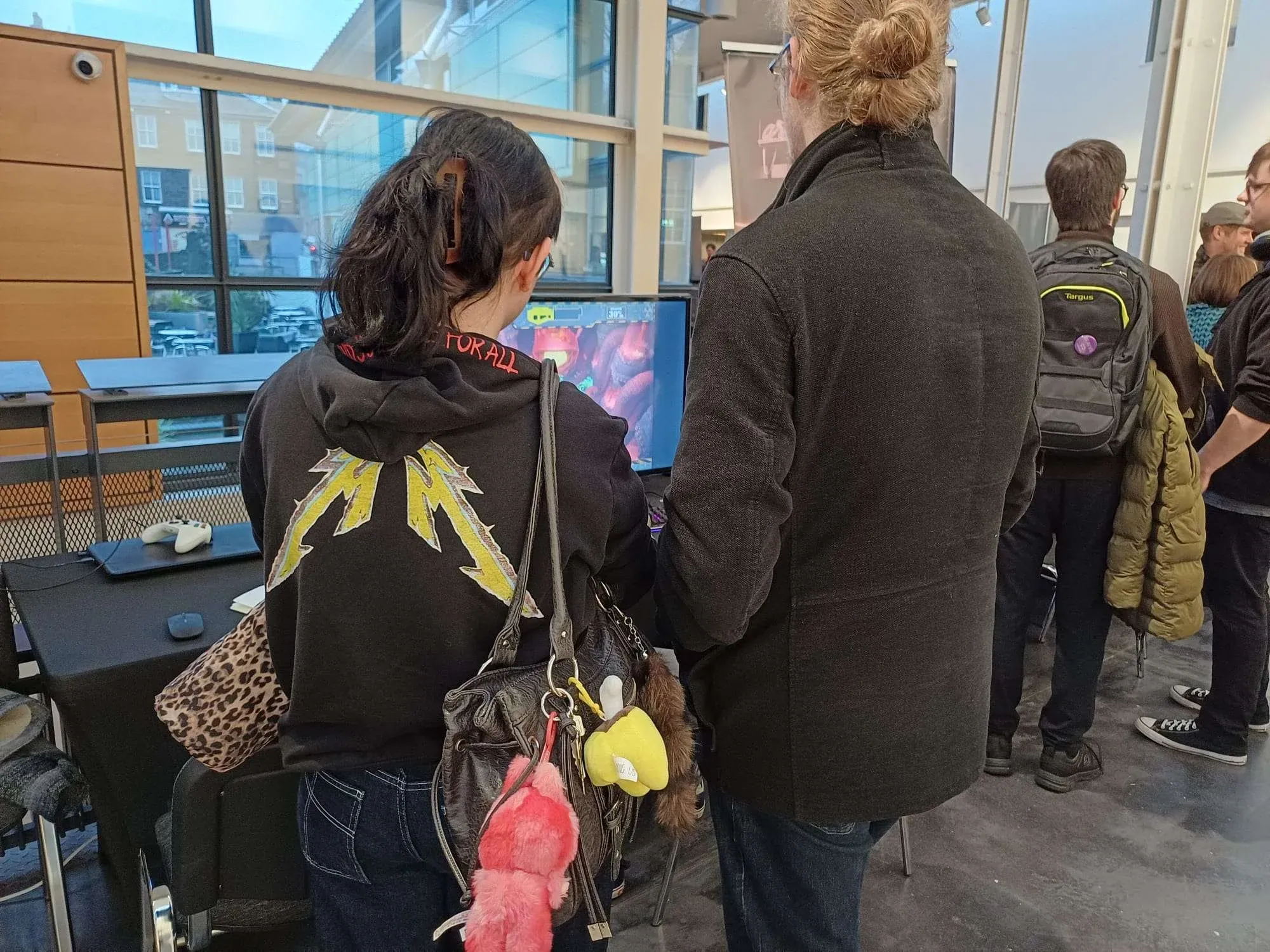
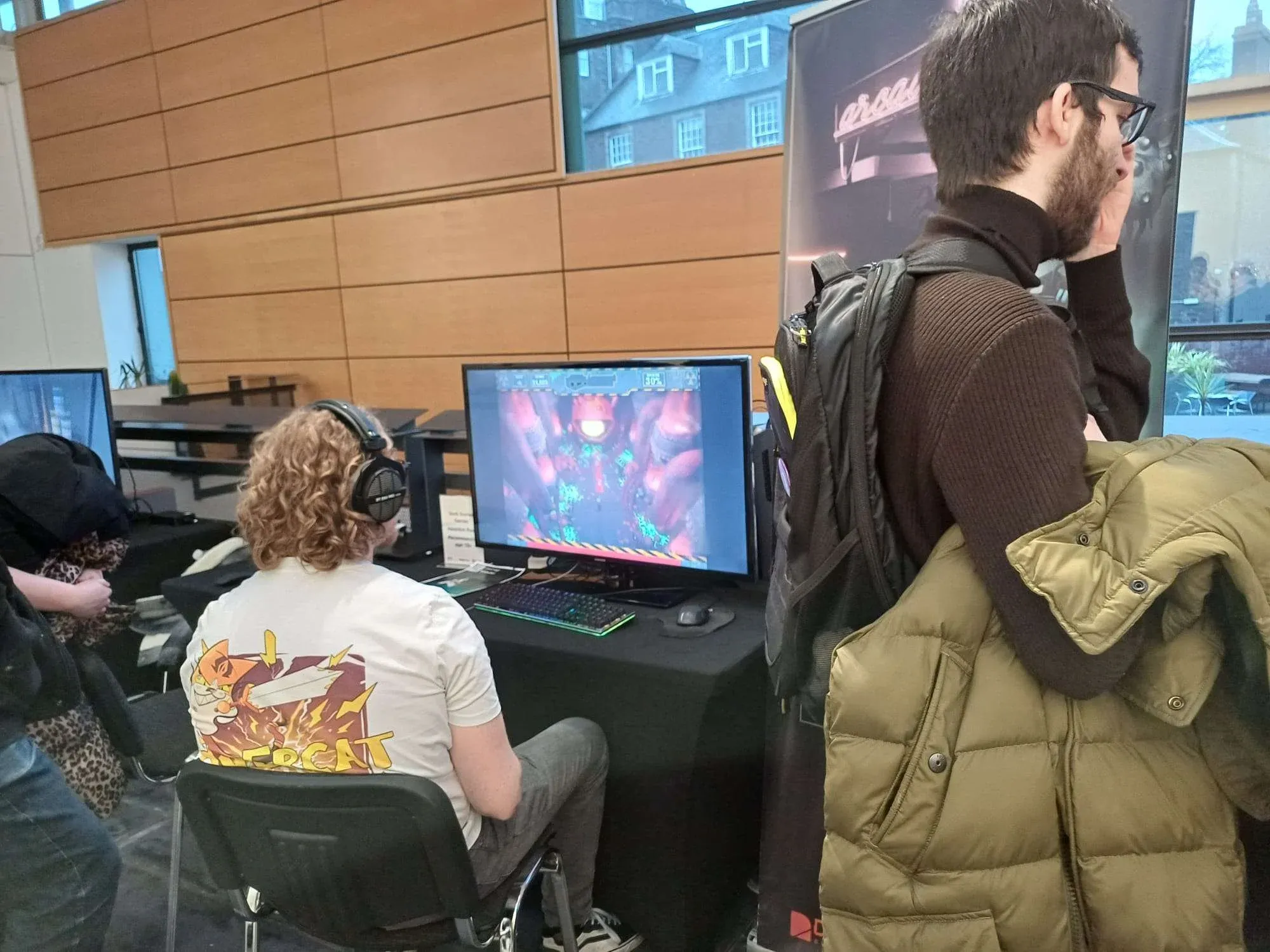
Playtesting at DCA Dundee
Development Realities & Constraints
Working in a large team of 18+ requires constant communication, strict version control, and the willingness to change course when feedback demands it. Below is a summary of the three biggest design pivots on Level 2, each explored in detail in the cards below.
Reflection
As a new member, I had to learn how to use several tools developed by the programming team. This took a little bit of time to get used to, and after figuring it out, a mistake I made was trying to start establishing the spline system in the level too early. I should have worked on finalizing the entire physical level, before adding in splines and enemies. This way this more time consuming process would be way more streamlined and linear.
Scrapped Idea
One idea I had for the 2nd level was to have a looping section in the top floor. The reasoning behind that was that since it's a mall, the player can go upstairs from 2 different elevators, and I wanted to make sure that the player had the choice to explore the entirety of the upper floor regardless of which elevator they chose. However, after some reflection, feedback from peers and discussion with the team, I decided to change it to a more linear path, in order to increase potential replayability and make the players choice have more impact.
Enemy Spawning Redesign
Initial enemy spawners were placed at fixed static positions with each spawn point representing one enemy. After internal playthroughs and discussing with the team, I proposed the idea of using spawn boxes with randomized spawn locations that can also control the number of enemies spawned. This increased development speed and spawning system usability, while also making the enemy spawning more dynamic and less predictable.