Sky Saloon
Context
Sky Saloon is a solo prototype I built inspired by Jump King — a 2.5D vertical platformer where precise, skill-based movement is the whole game. I wanted to design and implement a satisfying movement system from scratch, validate it through a graybox-first process, and build an environment using modular assets. Keeping performance at 80-100 FPS on lower-end hardware was a constraint I kept in mind throughout.
Key Accomplishments & Skills
Movement Systems Design
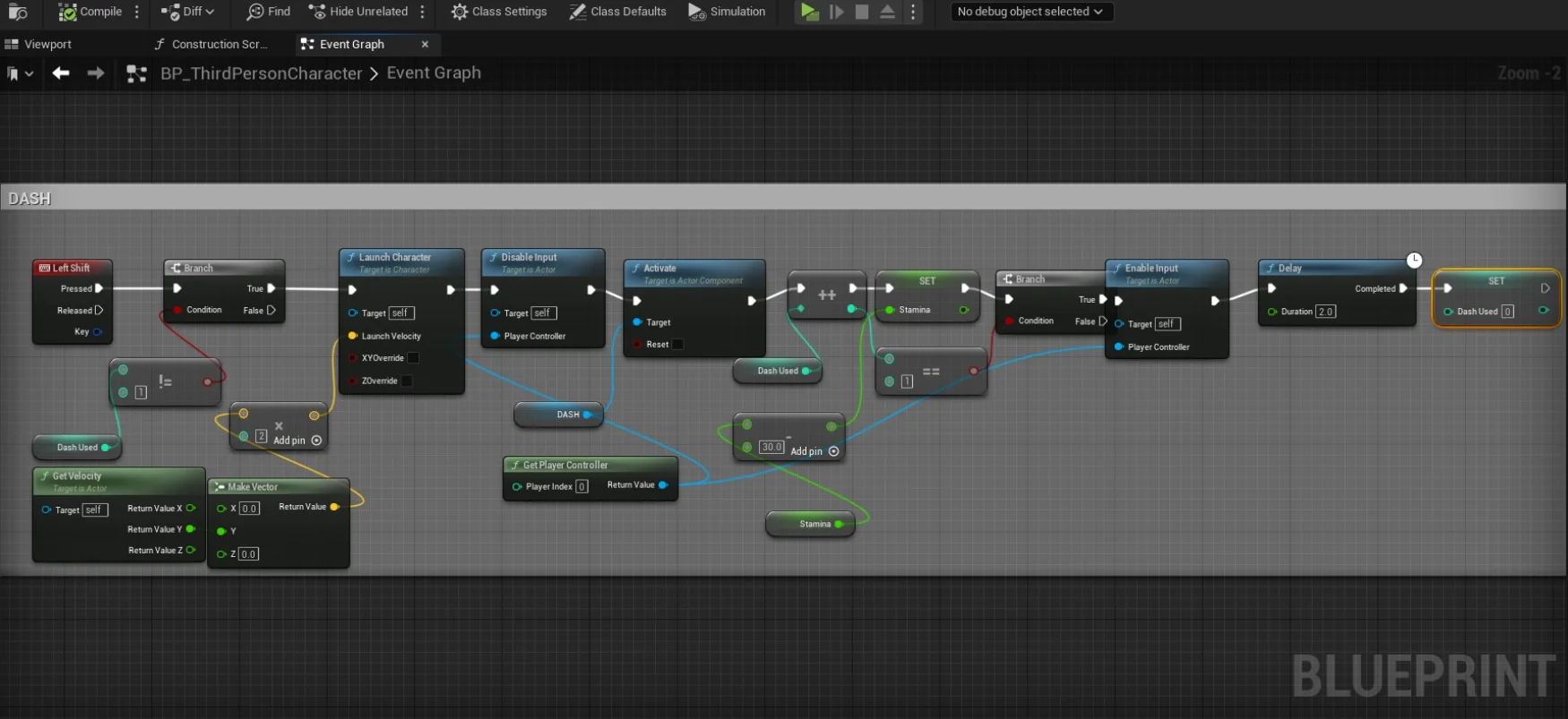
Designed a stamina system that gates both dash and double jump — stopping ability spam and making movement feel like a skill instead of just a reflex.
Graybox-First Pipeline
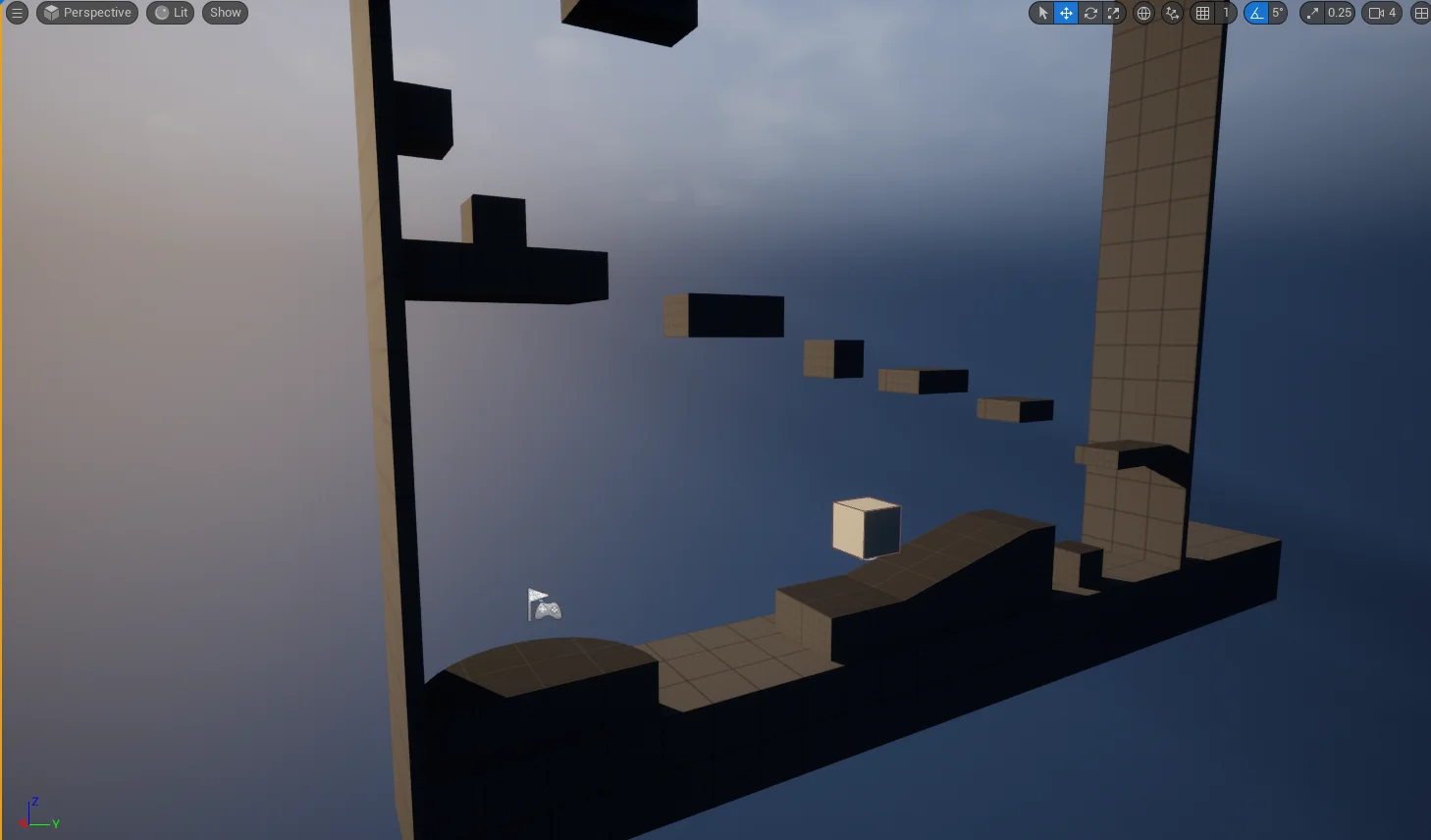
Built a dedicated graybox level to test all the mechanics and layouts before touching the final assets. Saved me from having to rework anything structural later.
Nanite & Lumen Implementation
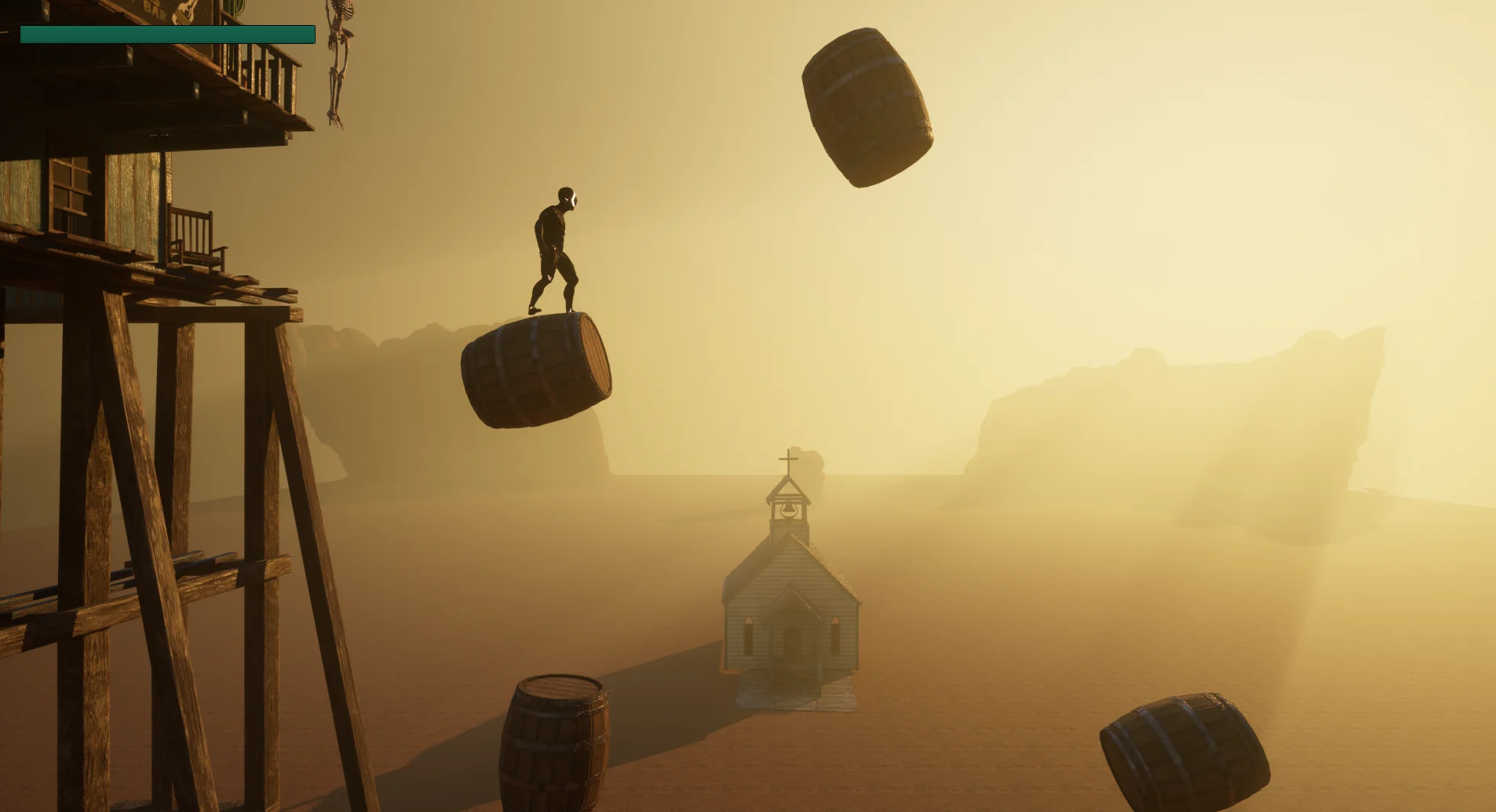
Challenged myself to learn Unreal's latest geometry and lighting systems. Used this project to research how Nanite and Lumen affect visual aesthetics and real-time optimization, especially when targeting consistent frame rates.
Stamina System & Movement Design
Core Mechanics & Skill Gates
Result: Dash and double jump feel rewarding when you use them well and punishing when you don't. Stamina management becomes the real skill expression of each run.
Intention: Without a resource gate, players could spam abilities and remove most of the challenge. I wanted every jump and dash to be a considered decision, not a reflex.
Process: Designed a stamina bar that drains on both dash and double jump, then playtested and tuned the depletion and regen rates until the rhythm felt demanding but fair. Also sourced VFX from the UE Marketplace and modified the particle values to loop continuously instead of playing once on pickup.
Graybox-First Workflow
Validation & Level Flow
Result: The full layout was validated before a single final asset went in, which meant no structural rework later.
Intention: Vertical platformers are really sensitive to platform spacing, ceiling height, and jump arc. You have to feel those things, not estimate them from a top-down view.
Process: Built the complete graybox first using basic geometry, tested every platform placement and dash distance, iterated until the movement rhythm felt right, and only then transferred the layout into the polished level.


Development Realities & Constraints
Solo Scope & Combat Trade-off
Building everything alone meant I had to be realistic about my time. I initially wanted combat, but I chose to cut it so I could focus entirely on making the movement and platforming feel as good as possible.
Lumen, Nanite & Optimization
This was my first time using these tools on my mid-range laptop. I had to learn how to heavily adjust mesh detail and textures until I found the right balance between high-quality visuals and smooth performance.
The GitHub Lesson
Losing my project to a disk failure was a painful but perfect way to learn about version control. Now I use GitHub for every project to ensure my work is always backed up and safe.